

The Group has set a long-term goal of net-zero greenhouse gas emissions by 2050 in order to contribute to the realization of a decarbonized society. To achieve this goal, we are conducting carbon management including energy conservation and visualization of energy consumption. Going forward, we plan to utilize renewable energy. In April 2022, we endorsed the recommendations of the Task Force on Climate-related Financial Disclosures (TCFD) and joined the TCFD Consortium (now the GX Future Consortium). We will conduct analyses and deliberations in line with the recommendations and continue to promote information disclosure. For more details, please refer to “Initiatives in Response to the TCFD Recommendations” via the link below.
In March 2026, our Group’s consolidated greenhouse gas reduction targets were validated by the Science Based Targets initiative (SBTi) as science‑based targets.
Goal of net-zero GHG emissions*1
*1Group consolidated basis.
30% reduction in CO2 emissions*2
*2Scope 1 + 2 (domestic Group consolidated, compared to FY2019/3)
| Target | Result | Targets | |
|---|---|---|---|
| FY2024 | FY2028 | 2030 | |
| Reduction in CO2 emissions | ▲15% | ▲More than 23% | ▲More than 30% |
*Scope 1 + 2 (domestic Group consolidated basis; compared with FY2018)
*New target set for FY2028
In FY2024, we started receiving solar power generated by Takasaki Morinaga and introduced a renewable energy power plan at our Head Office building and the Tsurumi Site*, which houses the R&D Center and a factory. This enabled us to reduce CO2 emissions by more than 6,800 tons, a 15% reduction compared with FY2018 and a 10% reduction compared with the previous year. In FY2025, we have also started introducing renewable energy power plans at the Mishima Factory and Morinaga Angel Dessert Co., Ltd., and will continue striving for further CO2 reductions.
*Tsurumi Factory, R&D Center, MORIUM, Yokohama Branch Office, Morinaga Shoji Co., Ltd., Morinaga BioScience Inc., Morinaga Business Partner Co., Ltd., etc., located in Tsurumi-ku, Yokohama City, Kanagawa Prefecture
| Initiatives | Detail |
|---|---|
| Reducing CO2 emissions at factories |
|
| Initiatives at facilities using fluorocarbons |
|
| Initiatives in logistics |
|
We are working on reducing emissions by measuring the overall volume of current CO2 emissions and making emissions visible.
Because Morinaga's four factories and three affiliated production companies account for a large portion of our CO2 emissions, we are stepping up efforts chiefly in our production division.
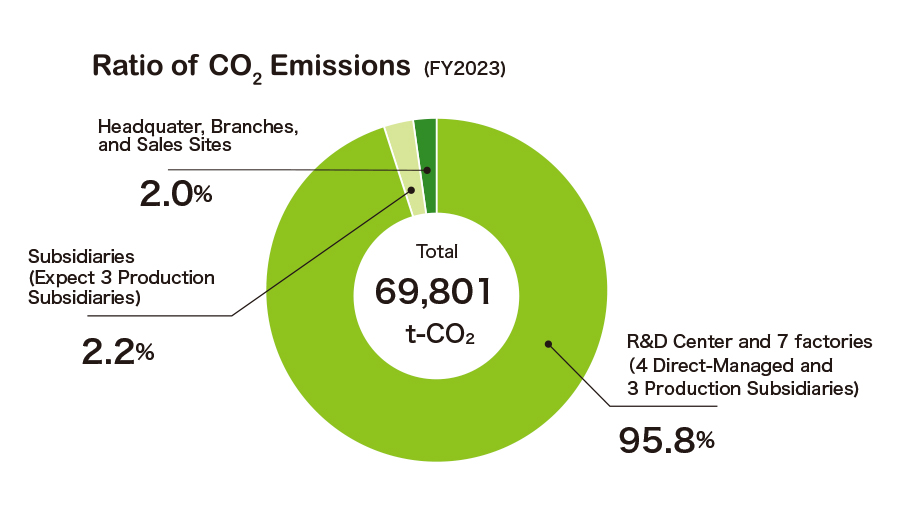
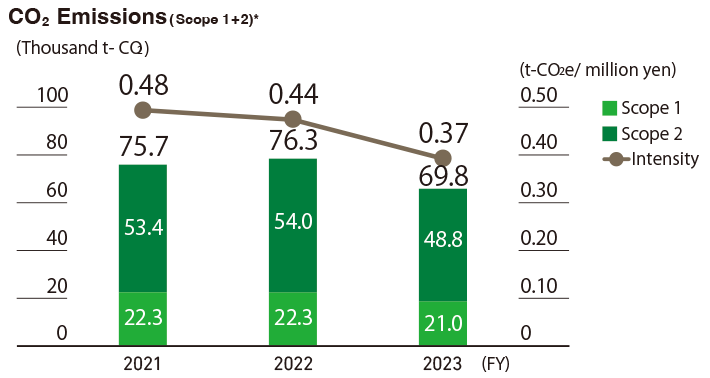
*Domestic Group consolidated basis. CO2 emissions are rounded up to the second decimal place. The figures for FY2020 and later is third-party assured by LRQA Limited.
We are currently examining the possibility of replacing CFC-using facilities with those using HCFCs and HFCs, with a low ozone depletion potential, or natural refrigerants. We are replacing equipment and devices that use CFC R-22 with those using a low-global-warming-potential refrigerant. We have also implemented stricter measures to prevent leakage of CFC gas from existing facilities.
Takasaki Morinaga Co., Ltd., Morinaga Angel Dessert Co., Ltd. and Morinaga Dessert Co., Ltd., whose product lines include frozen desserts, use refrigerant-equipments in their large-sized refrigerators with natural refrigerants that has zero ozone-depletion potential and low climate-change coefficient.
We will continue to work on reducing GHG emissions.
In an effort to load as many products as possible on a pallet, a platform used for product storage and transportation, we have adjusted dimensions of cardboard cases and apply our efficient stacking pattern for loading cases onto the pallets. Furthermore, we save the use of energy in the storage and transportation processes by designing our products to minimize the wasted space.
We also believe it is important to collaborate with other companies to reduce the environmental impact of transportation. As an example of our efforts, we collaborates with ITO EN, a beverage company, and Nippon Express, a logistics partner of both companies, to carry out joint transportation of lightweight confectioneries and heavy beverages between Gunma and Hokkaido. By loading our lightweight confectioneries into the empty space at the top of ITO EN’s beverage cargo, which cannot be multiple-stacked due to weight constraints, we are optimizing the volume of the cargo bed and reducing the burden on the driver.
We will continue to build efficient and sustainable logistics and supply chain systems through collaboration across industries, aiming to deliver safe and reliable products to customers continuously.
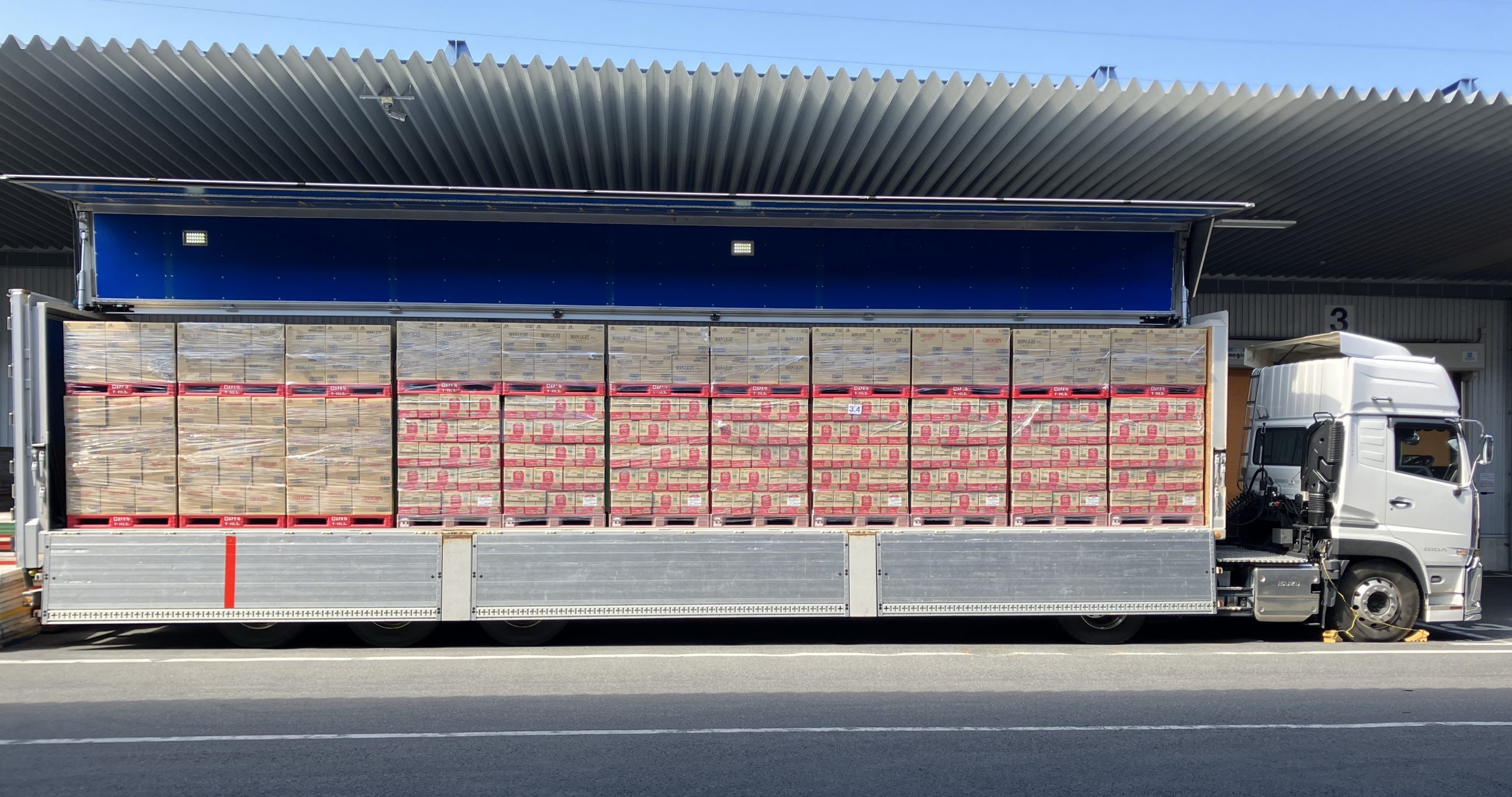
Loading heavy cartons of ITO EN beverages on the lower part of the deck of the truck,
and lightweight cartons of Morinaga confectionery on them
With a view to increasing the productivity of our core brands and responding to diversifying market needs, the Morinaga Group is reorganizing its production systems to make them highly efficient. In FY2020/3, in order to improve productivity, the decision was made to merge Morinaga Snack Foods Co., Ltd. and Morinaga Kofu Foods Co., Ltd. into the Company. The two production bases were closed, while their production lines were partially transferred to the Tsurumi Factory and the Oyama Factory and rebuilt there.
We also built a third factory on the premises of Takasaki Morinaga Co., Ltd., and started production of chocolates in FY2021/3 and frozen desserts in FY2022/3.
In the new factory and relocated production lines, we made capital investments taking into consideration energy saving. For example, we installed highly efficient energy-saving equipment and adopted a building design that features ceilings set lower than those of former buildings for the reduction of air conditioning loads.
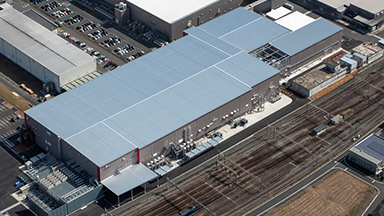
Takasaki Factory No.3
In order to make as much contributions as possible to the prevention of global warming, an international environmental issue, we are focusing on the facilitation of energy conservation promotion activities at our production sites, as most of our energy consumption is attributable to these facilities.
We have so far implemented such measures as: conducting energy-saving patrols to prevent overlooking of compressed-air or steam leakage from pipes and failures to switch off the lights; replacement of aged equipment with highly efficient one; and ensuring the optimal electricity consumption by installing inverters on pumps and fans with a power of 7.5 kW or above to respond to changes in equipment loads.
We also intend to facilitate our energy consumption promotion activities further, by seeking advice from energy conservation consultants, energy management companies, and equipment manufacturers, and planning and implementing energy conservation measures based on their advice.
The Morinaga Group has completed the calculation of the carbon footprint per unit for in Jelly Energy, one of our flagship products.
The Morinaga Group is working to introduce renewable energy to contribute to the realization of a decarbonized society.
In February 2024, Takasaki Morinaga Co., Ltd. started receiving solar power through an on-site PPA*.
With a generating capacity of 2.0 MW, in FY2024, we achieved an annual CO2 reduction of 1,102 tons.
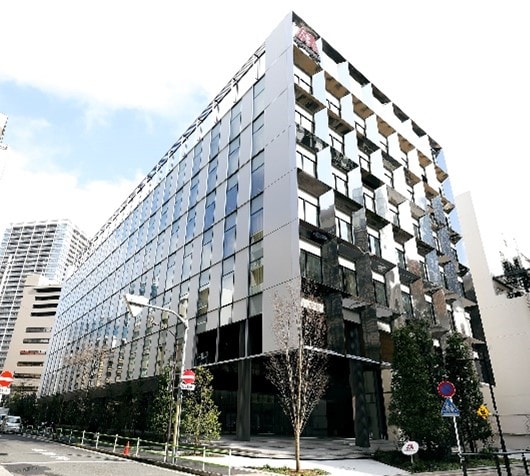
In addition, when the Company moved its head office functions to the Morinaga Shibaura Building, which completed its reconstruction in March 2024, it adopted a plan to supply electricity derived from solar, wind, hydroelectric and other renewable energy sources, to aim essentially zero CO2 emissions.
Furthermore, in April 2024, we switched to a renewable energy power plan at the Tsurumi Site, which includes the Tsurumi Factory and the R&D Center. Starting in April 2025, we will also switch to this renewable energy power plan at the Mishima Factory and Morinaga Angel Dessert Co., Ltd. Through these transitions, we expect to achieve a combined annual CO2 reduction of over 15,500 tons.
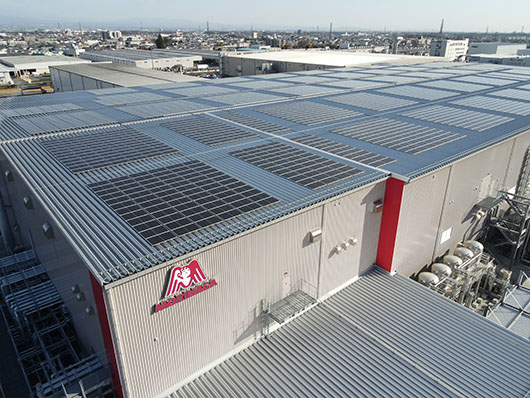
Rooftop solar panels (Takasaki Morinaga Co., Ltd.) and
new "Morinaga Shibaura Building" (Morinaga & Co., Ltd.)
*On-site PPA: A system in which a power generation company (PPA operator) installs a solar power generation system on the premises of a consumer (company, etc.) at the expense of the power generation company, and owns and maintains the system while supplying electricity generated from the system to the consumer.
As a measure to ensure efficient distribution and environmental friendliness, Morinaga works to improve loading rate using modal shift, joint deliveries with other companies, design product specifications for high loading rates, and introduce demand forecasting using AI for optimal inventory allocation and upgrade supply operations, etc.
As a Specified Consignor* under the revised Act on the Rationalization etc. of Energy Use (“Energy Saving Act”),we calculate and identify the amount of CO2 emitted during transportation.
The General Manager of the Sustainable Management Division of our company attended the meeting of Japan Food Industry Association from the confectionery industry, to discuss various sustainability issues, including environmental issues such as climate change, as well as report to the government and collect information.
At the All Nippon Kashi Association, the General Manager of our company's Procurement Division is the chairperson of the Committee on Environmental Issues. In that Committee, we are involved in making GHG emissions visible and promoting carbon footprints, also examine industry issues and exchanges opinions with the government.
Additionally, we participate in the Sustainable Food System Platform, administered by the Ministry of Agriculture, Forestry and Fisheries.The Platform will deepen discussions among stakeholders in the food system on sustainability issues that are difficult and inefficient to tackle by our company alone, such as managing the supply chain from upstream to downstream in the food industry and building understanding among consumers.Through this participation, we aim to lead to solutions to issues in the food industry through close public-private collaboration.
Furthermore, in order to stay up to date with the latest trends in climate change and respond appropriately, we continuously participate in seminars, study sessions, and working groups organized by government agencies such as METI, MOE, and MAFF, as well as relevant industry associations. We collect a wide range of information, and the insights gained are promptly reflected in our climate change policies and strategies to ensure alignment with national and industry trends. Additionally, we regularly confirm that there are no discrepancies between our climate change initiatives and the activities of industry associations to which we belong. If any issues are identified, they are discussed within the Group's Environmental Subcommittee, and necessary adjustments are made through the Sustainability Committee, chaired by the Representative Director, President. Through these efforts, we maintain consistency between our stance and the positions of our affiliated organizations, strengthen public-private collaboration, and aim to solve challenges facing the entire food industry.